The Humanitarian Builder
Odogwu Kiwi
Onyi Anumba
Nigeria
Founding Living Legend · Inducted 2026
Introduction
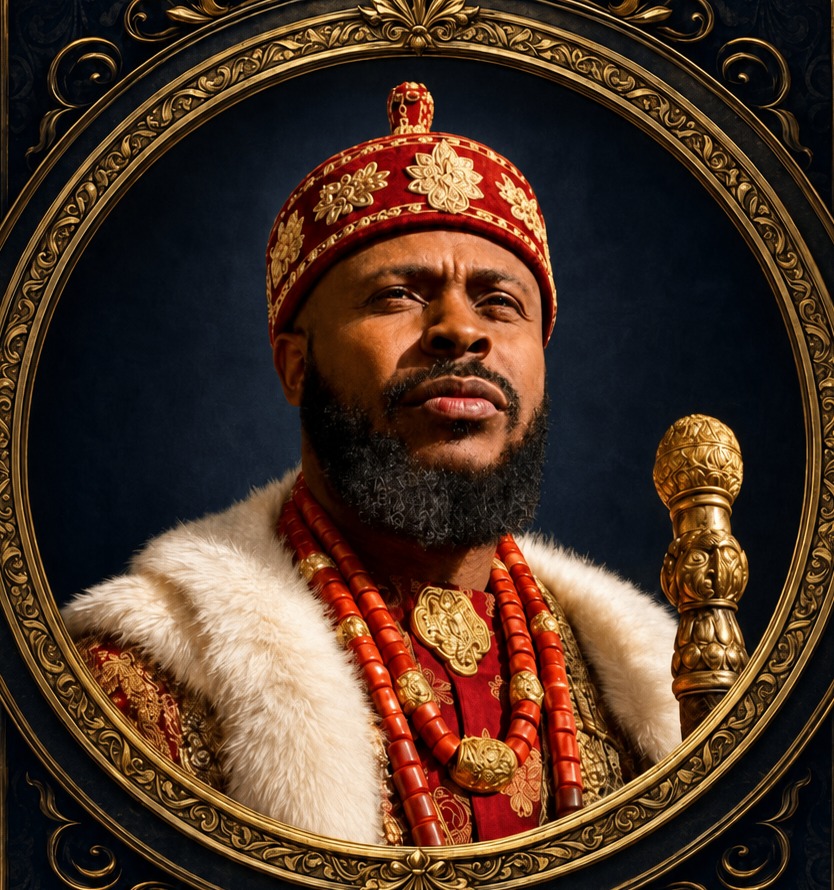
Odogwu Kiwi — The Humanitarian Builder
A Nigerian humanitarian creator, women’s empowerment advocate and community builder who has turned his digital platform into an open door for people who need to be heard, supported and reminded of their worth. Through honest conversations, women-focused initiatives, business visibility and community participation, Odogwu Kiwi demonstrates that influence becomes meaningful when it helps somebody else stand again.
Their Story
The full story
There are platforms built to collect attention, and there are platforms built to redistribute it.
Odogwu Kiwi, publicly known as Onyi Anumba, has built the second kind.
At the centre of his work is a belief that people should not have to become invisible simply because they are struggling. His platform creates room for people to speak honestly about life, hardship, relationships, survival, business, emotional pain and the circumstances that are often hidden behind carefully presented lives.
People are not required to arrive with perfect language or polished stories. They are permitted to arrive as they are.
That openness has made his platform more than entertainment. It has become a meeting place between human need and human willingness.
Much of Odogwu Kiwi’s work has centred on women.
As a man advocating for women, his value does not lie in speaking over them. It lies in creating room for women to speak for themselves, tell their own stories, present their businesses, confront dependency, recognise their abilities and imagine lives that are not permanently controlled by hardship.
He consistently challenges women to understand that empowerment is not merely receiving help. It is gaining the confidence, knowledge, visibility and opportunity required to build something sustainable.
His women-focused initiatives have allowed entrepreneurs and aspiring business owners to present what they do, explain their ideas and receive greater visibility. Through public conversations and community participation, women who may otherwise have remained unseen have been given opportunities to promote themselves, their work and the possibilities they are trying to create.
The deeper power of his platform is that he does not position himself as the only person capable of helping.
He allows people to help one another.
A person tells a story. Another person listens. Someone offers encouragement. Someone provides information. Someone chooses to contribute. Strangers who may never have met become participants in another human being’s attempt to stand again.
This transforms help from a performance into a community act.
His work also acknowledges the emotional reality behind financial and social hardship. Many people do not only need money. They need a place where they can admit that they are tired, confused, afraid or overwhelmed without immediately being condemned.
By creating space for difficult conversations, his platform touches mental health, dignity and human connection — even when the conversation does not carry a formal clinical label.
Although women and children remain central to his public advocacy, his concern is not limited to one gender. Men, families, young people and individuals experiencing crisis have also found room within the community he has built.
What distinguishes Odogwu Kiwi is not perfection.
It is availability.
He makes himself available to uncomfortable stories. He listens to circumstances that many people scroll past. He permits his platform to become useful to people other than himself.
That is an important form of leadership.
Influence is often measured by numbers: followers, views, reactions and reach. But numbers alone do not tell us what an influence has done.
The greater question is this: what became possible because people were listening?
In Odogwu Kiwi’s case, people have been heard. Businesses have gained visibility. Women have been encouraged toward independence. Community members have participated in helping strangers. Stories that could have remained hidden have been given an audience.
His work reminds us that a platform can become infrastructure.
It can connect pain to possibility. It can connect a small business to a customer. It can connect a person in crisis to a stranger willing to care. It can remind people that, even in a world where attention is often treated as currency, attention can still be used as service.
The Sister EF Legacy of Purpose Foundation recognises Odogwu Kiwi not because he has created a perfect world, but because he repeatedly uses the world available to him — his voice, audience, platform and reach — to help other people become visible.
He represents a leadership that does not only ask: ‘How many people are watching me?’ It asks: ‘What can become possible because they are watching?’
For his commitment to women’s empowerment, his humanitarian spirit, his willingness to create room for difficult human stories and his continued effort to transform influence into access, dignity and community participation, Odogwu Kiwi — Onyi Anumba — is recognised as a Founding Living Legend of the Sister EF Legacy of Purpose Foundation Wall of Honour.
Recognition
Why we honour him
Why We Honour Him
Because he has used visibility to make other people visible.
Impact in Action
- Women’s empowerment
- Women-owned business visibility
- Public storytelling
- Community participation
- Emotional support and honest conversation
- Advocacy for women and children
- Practical opportunities for people experiencing hardship
The Legacy He Is Building
A community in which influence is measured by what it makes possible for others.
Foundation Recognition
Odogwu Kiwi is recognised as a Founding Living Legend in 2026 for humanitarian digital leadership, women’s empowerment advocacy and community-building impact.
Continue